

UK Holiday Entitlement Calculator
Calculate pro-rata holiday for your team members.
Ditch the Paperwork, Automate Your Annual Leave
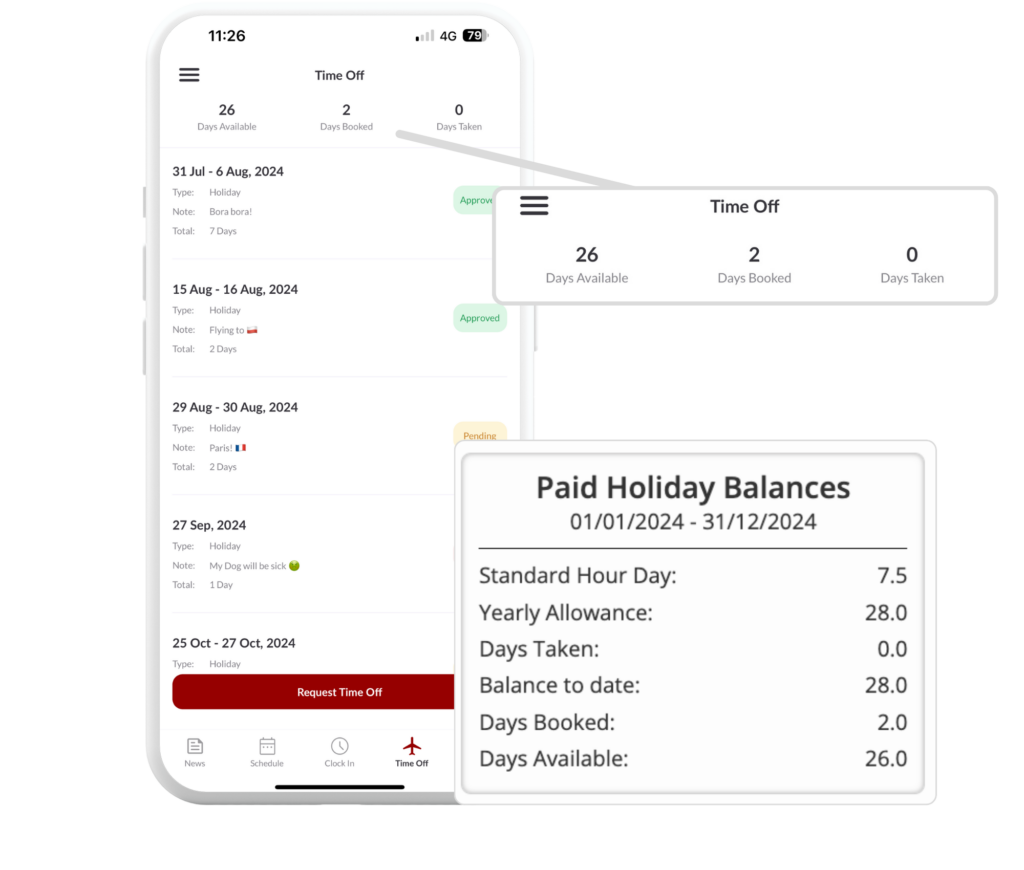
Did you know Bizimply is a workforce management tool that automatically calculates holiday entitlement and keeps records for you? Our smart HR, Scheduling & Time Tracking software gives you real-time access to leave balances across multiple locations with automatic accruals that keep you legally covered.
Requests come in, managers approve them instantly, and your HR records update automatically. By streamlining time-off management, your team can ditch the paperwork and focus on higher-value tasks.
The Basics of Annual Leave
Full-Time Workers: If you work 5 days a week, you get a minimum of 28 days (5.6 weeks) of paid holiday per year. This usually includes bank holidays.
Part-Time Workers: Your holiday is calculated pro rata (proportionally). If you work 2.5 days a week, you get exactly half of a full-time allowance (14 days).
Starting or Leaving Mid-Year: Your holiday allowance for that year is reduced to match only the months or days you actually worked.
Irregular & Zero-Hours Workers: Your holiday builds up based on the actual hours you work, usually calculated using an average from a previous reference period.
Carrying Over Holiday: If you don’t use all your holiday, whether you can roll it over to the next year depends on your employer’s rules, though strict legal limits apply to the statutory minimum.
Managing leave for a whole team
Bizimply is more than a holiday calculator – it’s a complete annual leave entitlement calculator for businesses.
- Pro rata holiday calculator for part time employees and irregular hours staff
- Track sick leave, notice period, and unused holiday allowance
- Employee self-service portal – no spreadsheets needed
- Works across all working patterns (days a week, hours worked, weeks paid)
Want to avoid errors in calculating annual leave? Automate entitlement, holiday pay, and bank holidays with Bizimply.
FAQs Calculating holiday entitlement
How do you calculate pro rata holiday entitlement in the UK?
Pro rata holiday entitlement is calculated based on the number of days a week or hours an employee works compared with a full time worker. Our pro rata holiday calculator makes it easy to see how many days of holiday an employee is entitled to.
What happens to annual leave entitlement if an employee joins partway through the year?
If an employee works only part of a leave year, their entitlement is calculated on a pro rata basis from the start date until the end date of employment. This ensures the employee is treated fairly and receives the same amount of paid leave as full time workers.
What happens to annual leave entitlement if an employee joins partway through the year?
If an employee works only part of a leave year, their entitlement is calculated on a pro rata basis from the start date until the end date of employment. This ensures the employee is treated fairly and receives the same amount of paid leave as full time workers.
What is the maximum statutory holiday entitlement per year?
The maximum statutory entitlement is 28 days (5.6 weeks) for full time employees. Even if there are more UK bank holidays in a holiday year, statutory leave does not exceed 28 days paid time off.
How much annual leave are part time employees entitled to?
Part time workers have their annual leave entitlement calculated on a pro rata basis. For example, if an employee works 3 days a week, their entitlement is 3/5ths of 28 days. Use our annual leave entitlement calculator to work this out in seconds.
Are bank holidays included in statutory annual leave entitlement?
Yes. The statutory minimum of 5.6 weeks (28 days) annual holiday entitlement can include UK bank holidays and public holidays. Employers may decide whether these are included in the holiday allowance or given in addition.
Can unused holiday allowance be carried over into the next year?
Many employers allow unused holiday to roll over into the next leave year. This is calculated based on statutory entitlement rules and may vary — always check your employee handbook.
How is holiday pay calculated for zero hours workers or irregular hours staff?
Holiday pay and annual entitlement for zero hours workers is calculated based on average hours worked over the past 52 weeks. This ensures employees receive paid time off that reflects their working patterns.
Check out the gov.uk website for more information on holiday pay and employment rights.

Request a demo today!
Get to know Bizimply. Our product experts will guide you through our solution with a 15-minute Zoom demo.