



Peak season can transform a hospitality or retail business overnight. A hotel or resort may experience a sudden surge in room occupancy, banqueting, and holiday bookings, demanding extra housekeeping, front desk, kitchen, and waiting staff. A busy retail store might scale from its standard core team to dozens of temporary shop floor, stockroom, and checkout assistants to handle holiday shoppers. An elder care or residential facility may need relief care assistants to cover holiday rotas, while events and logistics providers manage spikes in attendance and deliveries.
Temporary and seasonal employees can give businesses the flexibility they need to handle these peaks. But bringing more people into the workforce also creates additional challenges: availability, scheduling, onboarding, working hours, payroll, holiday entitlement, compliance and accurate time tracking all need to be managed.
For businesses operating in the UK and Ireland, there is another consideration: temporary employees still have employment rights and employers need appropriate records and processes.
The key is to have a workforce plan that makes it easy to put the right people in the right place at the right time, while keeping accurate records of the hours they actually work.
1. Plan temporary staffing requirements before peak season
The first step is to forecast demand. Instead of simply deciding that you need “10 extra people,” look at the expected workload by:
- Day and time of day
- Site, depot, or branch location
- Department and operational zone
- Required role and skill certification
- Sales volume, orders processed, or footfall
- Historical throughput and service levels
For example, a retailer might need additional employees between 5pm and 8pm during Black Friday week rather than needing the same number of additional employees throughout the entire day.
A restaurant may need additional front-of-house employees during dinner service while requiring additional kitchen staff earlier for preparation.
This distinction matters because temporary staffing should be linked to demand rather than simply adding headcount.

Bizimply can help businesses connect workforce scheduling and forecasting, allowing managers to plan schedules around labour requirements and monitor scheduled hours. It connects your scheduling directly to your point-of-sale (POS) systems and historical revenue data, taking the guesswork out of peak-season rotas. Instead of staffing based on intuition, managers can view sales forecasts side-by-side with scheduled hours down to 15-minute or hourly intervals.
- Real-time sales per labour hour (SPLH): Monitor target labour percentages against anticipated revenue so you never overstaff during prep hours or understaff during rush service.
- Historical trend mapping: Pull sales data from previous bank holidays, Black Friday weekends, or Christmas rushes to model expected footfall spikes accurately.
- Live labour cost variance: As managers build the rota, Bizimply dynamically calculates projected labour spend against forecasted revenue, alerting you before an over-budget schedule is ever published.
2. Standardise Onboarding Before Day One
Temporary employees often have less time to become familiar with the business. That makes a structured onboarding process particularly important. Before their first shift, make sure you have collected and communicated the information they need, including:
- Employment terms, role specification, and work location
- Expected shift patterns and overtime rates
- Bank details and tax declarations
- Emergency contacts and medical disclosures
- Right-to-work documentation and ID verification
- Core health, safety, and operational site rules
- Reporting lines and supervisor contact details
- Digital clock-in and clock-out procedures
For Irish employers, seasonal workers have employment-law protections, and the Workplace Relations Commission states that employees must receive a written statement of core terms within five days of starting and a full written statement within one month.
For temporary agency workers, make sure responsibilities between the agency and the hiring business are clearly understood.
Chasing paper forms with seasonal hires is messy, risky, and wastes valuable time during your busiest weeks. Bizimply digitises employee onboarding so everything is signed and sorted before their first shift:
- Self-serve profile creation: New hires enter their personal details, bank information, emergency contacts, and tax references directly via their smartphone or desktop before their first shift.
- Integrated e-signatures: Contracts of employment, core terms, and workplace safety policies are shared and signed digitally within the platform. Timestamped records are stored securely in the employee profile, providing a clear audit trail for Irish WRC inspections or UK statutory compliance.
- Pre-shift compliance checklists: Track right-to-work uploads, age verification, and completed training modules, ensuring no temporary team member steps onto the floor without verified documentation.
3. Make employee availability visible
Availability is one of the most volatile variables when managing temporary and casual workforces. A seasonal hire may be balancing university schedules, another part-time role, family responsibilities, or transport constraints.
When managers lack visibility into these commitments, building a rota turns into endless back-and-forth messaging and manual spreadsheet revisions.
Bizimply’s companion app, MyZimply, shifts availability management directly into the employee’s hands:
- Proactive availability submission: Staff set their recurring available and unavailable windows well in advance, giving managers a clear, live talent pool before they begin drafting the schedule.
- Real-time rota conflicts: When building rotas in Bizimply, the system visually flags scheduling conflicts, unapproved time-off requests, and employee unavailability markers directly on the planner interface.
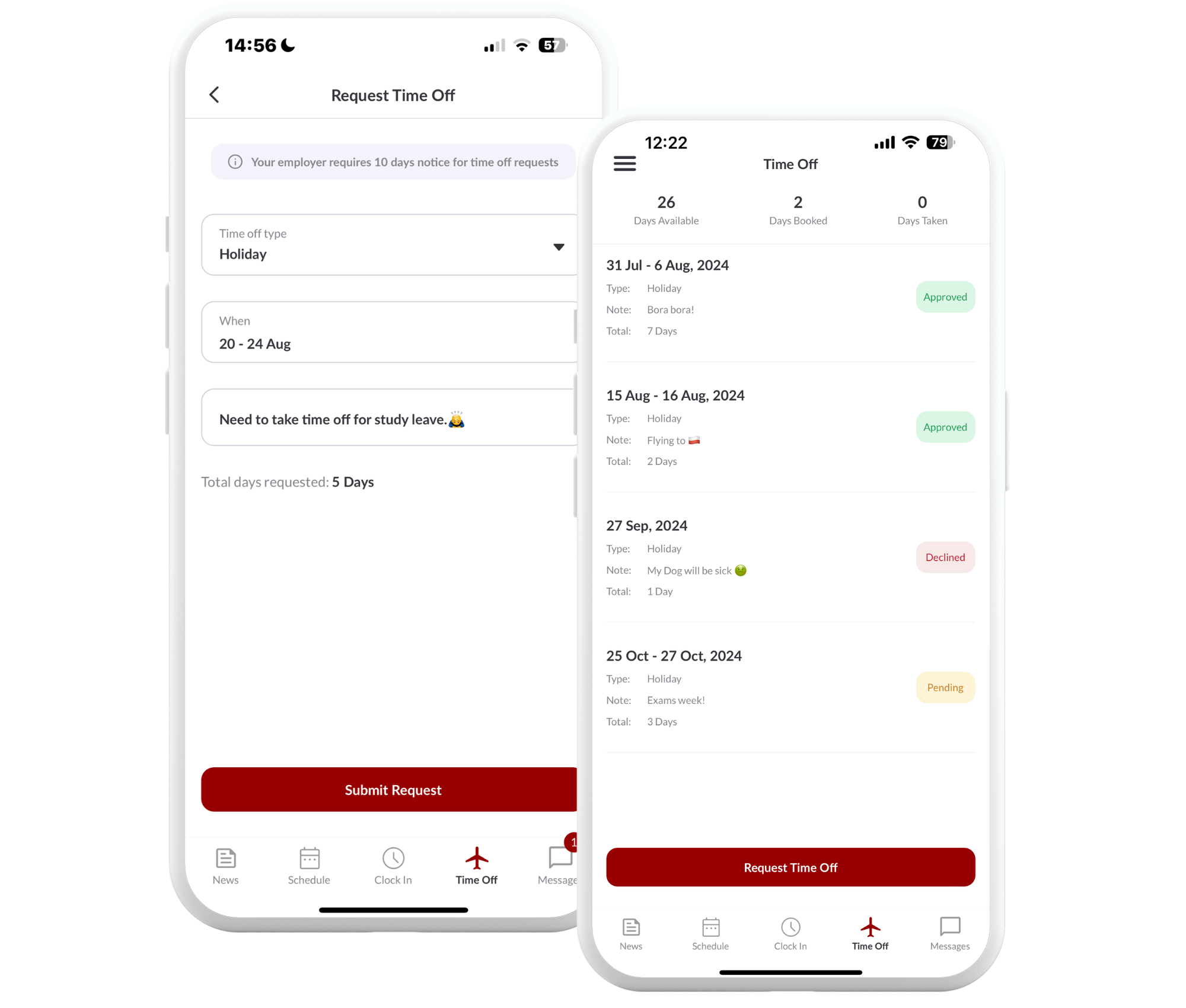
- Time-off & holiday requests: Temporary staff can request single days or multi-day time off inside the app, giving managers one-click approval workflows that instantly update roster availability.
- Prevent Last-Minute Gaps: Stop staff from requesting time off during high-demand or critical trading periods with blocked dates (such as Christmas Eve, Boxing Day, New Year’s Day, or major local events)
4. Build rotas around demand, not just availability
Availability is important, but it should not be the only factor in the schedule. The objective is to match:
Customer demand + employee availability + labour budget
This approach helps businesses avoid one of the biggest peak-season problems: paying for labour when demand doesn’t require it.

Bizimply provides scheduling tools including open shifts, shift offers, labour-hour views and scheduled-vs-actual reporting. Building rotas around peak trading requires agility. Bizimply gives managers flexible scheduling mechanisms to adapt when trade surges:
- Open Shifts: Managers can publish unassigned shifts directly to qualified team members. For instance, if an unexpected sunny afternoon or sudden banquet booking creates a gap, managers drop an “Open Shift” onto the rota and notify available staff simultaneously.
- Shift Offers & Claims: Eligible temporary workers receive push notifications through MyZimply and can claim open shifts on a first-come, first-served basis—filling staffing voids in minutes without phone tag.
- Skill & role tagging: Ensure shifts are matched only to employees with the appropriate training (e.g., barista, keyholder, personal licence holder, fork-lift certified).
- Visual labour budgeting: Colour-coded role views and live hourly headcount tallies allow managers to see gaps instantly against planned trading curves.
5. Give Staff Clear, Centralised Shift Details
Communication errors multiply as team size grows. Every temporary worker should know four basic facts without having to contact their supervisor:
- Where am I working?
- What time does my shift begin and end?
- What specific role or station am I covering?
- Who is my shift supervisor?
With Bizimply’s employee app, employees can access their schedule and shift details and receive notifications about scheduled work.
For multi-site businesses, this can also help reduce confusion when temporary workers are assigned to different locations. Temporary workers deployed across multiple venues or pop-up retail kiosks frequently face confusion over shift timing, site addresses, and line managers. Bizimply resolves this through centralised mobile communication:

- Instant shift publication notifications: The second a rota is published or edited, workers receive instant push alerts and emails displaying the exact date, shift times, department, assigned station, and site location.
- Multi-site roaming profiles: For hospitality groups or retail chains moving temporary teams between stores or restaurants, staff see clear map directions, site-specific manager contacts, and unique location notes directly on their MyZimply home screen.
- Read confirmations: Managers can see who has viewed their published shifts, eliminating the “I didn’t know I was working” excuse.
6. Track actual hours worked, not just scheduled hours
A rota tells you what should happen. Time and attendance data tells you what actually happened. This distinction becomes particularly important during peak season. A temporary employee might:
- arrive early
- leave late
- work a longer shift
- miss a break
- swap shifts
- stay to cover an absence
- work a different location
- work additional hours that weren’t on the original rota
If managers only use the scheduled rota for payroll, they may not have an accurate picture of actual hours.
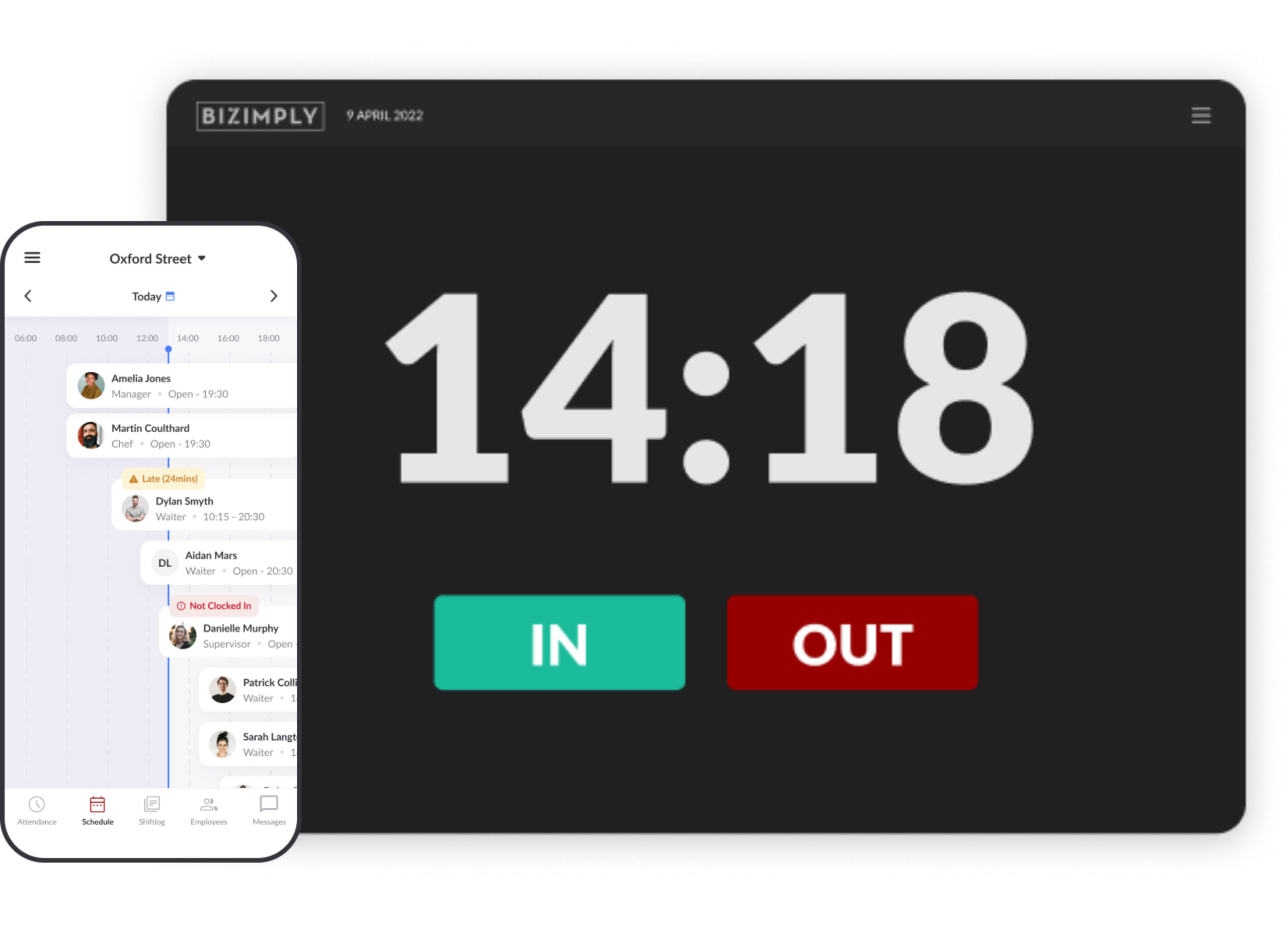
Bizimply’s Time & Attendance tools capture clock-in and clock-out information, with timecards providing a record of hours worked that can be reviewed and prepared for payroll.
- Visual Variance Monitoring: Compare planned rota hours directly against actual clock punches to catch punctuality trends and unauthorised overtime as they happen.
- Live Attendance Board: Supervisors can check active floor coverage from any device to see who is on site, who is on break, and who is late.
- Streamlined Timecard Processing: Clock punches feed directly into digital timecards. Managers review flagged exceptions (such as early punches or overrun shifts), make edits, and approve verified hours for straightforward payroll export.

7. Don't Overlook Working-Time Compliance, Rest Periods & Tips
Peak trading puts immense pressure on rotas, making working-time rules and pay obligations easy to overlook. Both the UK and Ireland enforce strict statutory protections that apply directly to temporary, casual, and agency workers.
Shift Gaps and Rest Breaks
- Daily & Weekly Rest (UK & Ireland): Workers are legally entitled to at least 11 consecutive hours of daily rest between shifts and 24 uninterrupted hours of weekly rest (or 48 hours per fortnight). In fast-paced shift operations, watch out for “clopenings” scheduling an employee on a late close followed immediately by an early open directly breaches this statutory requirement.
- Young Workers (Ages 16–17): Additional rules apply to younger staff. They are capped at a maximum of 8 hours per day / 40 hours per week, must receive a mandatory 30-minute break for shifts exceeding 4.5 hours, and require a strict 12-hour rest window between shifts.
UK Temporary Employee Compliance
- Maximum Hours & Minimum Wage: UK workers have statutory rights to the applicable GOV.UK – National Minimum Wage rates and GOV.UK – Rest breaks at work. Workers cannot exceed an average of 48 hours per week unless they have signed an individual opt-out agreement under GOV.UK – Working time limits.
- Holiday Pay & Accrual: Irregular-hour and part-year temporary staff accrue holiday entitlement at 12.07% of hours worked. Employers can also use rolled-up holiday pay (paying the 12.07% uplift on each payslip), provided this is explicitly outlined in the written employment terms.
- Agency Worker Protections: Under GOV.UK – Agency workers’ rights, after 12 continuous weeks in the same job, agency workers qualify for the same basic conditions as direct recruits, covering pay, working hours, night work, rest breaks, and annual leave. For broader entitlements, consult GOV.UK – Employment rights and conditions.
Ireland Temporary Employee Compliance
- Equal Treatment from Day One: Under the Workplace Relations Commission (WRC) – Temporary Agency Workers guidelines, agency workers must receive equal treatment with direct hires from day one regarding pay, WRC – Working Hours, rest breaks, night work, and amenities. Direct casual staff must also receive at least the WRC – National Minimum Wage.
- Holiday Accrual & Premiums: Holiday pay is calculated via statutory methods under the Organisation of Working Time Act 1997 (commonly 8% of hours worked). Staff working Sundays are legally entitled to a statutory Sunday premium (an allowance, higher pay rate, or paid time off) if not already included in their base rate. Casual employees who log at least 40 hours in the 5 weeks before a public holiday also qualify for statutory public holiday benefits.
- Core Written Terms: Under WRC – Terms of Employment, employers must provide core written terms within 5 days of starting (including contract duration for temporary roles) and full written terms within 1 month.
- Immigration & Permissions: Non-EEA nationals require a valid permit or appropriate permission under DETE – Employment Permits.
Tips & Tronc Management (UK & Ireland)
Service charges and tips surge during peak periods. Under both the UK Employment (Allocation of Tips) Act and the Irish Payment of Wages (Tips and Gratuities) Act, operators are legally banned from deducting processing fees and must distribute 100% of collected tips fairly:
- Casual & Agency Parity: Temporary and agency staff fulfilling customer-facing service duties cannot be excluded from tip or tronc pools.
- Automated Allocation with Bizimply: Rather than calculating payouts on spreadsheets, Bizimply links tip distribution directly to verified TimeStation clock-in hours and department role tags. This ensures casual staff receive accurate tip-outs based on actual hours worked, keeps an unalterable audit trail for Troncmaster independence, and syncs directly with payroll.
Operational Safeguards: Shadow Shifts & Standby Buffers
- Shadow Shifts: Pair new seasonal hires with experienced core staff for their first 1–2 shifts. This cuts down on customer-facing mistakes and reinforces clock-in and rest-break compliance without overwhelming line managers.
- Standby Pools: Temporary workers carry higher drop-out and no-show rates. Maintain an on-call reserve list who can quickly claim Bizimply Open Shifts via their phone, filling sudden vacancies before service is impacted.
8. Pay particular attention to agency workers
Using an agency can make recruitment easier, but it doesn’t mean managers can ignore workforce compliance. Before using an agency, establish:
- Who is the legal employer?
- Who pays the employee?
- Who manages their schedule?
- Who records their hours?
- Who is responsible for payroll?
- Who handles absence?
- Who provides training?
- Who is responsible for health and safety?
- How will equal-treatment requirements be assessed?
- How will the worker’s time be recorded?
In the UK, GOV.UK states that the agency is responsible for certain employment obligations, while the hiring business retains responsibilities including health and safety and providing relevant terms and conditions information to the agency.
In Ireland, the WRC defines an agency worker as someone employed by an employment agency and assigned to work under the direction and supervision of another person or business.
9. Unify Systems for Permanent and Temporary Teams
A common mistake is creating a separate process for temporary workers.
For example:
- Permanent employees: digital rota + clock in/out
- Temporary employees: spreadsheet + WhatsApp + paper timesheet
This creates unnecessary administrative work and makes it harder to get a complete picture of the workforce. Where appropriate, temporary employees can be managed through the same operational systems as permanent employees.
With Bizimply, managers can schedule employees, manage availability, track attendance and review timecards in one workforce-management platform.
10. Have a plan for absence and last-minute gaps
Peak seasons always bring last-minute disruptions, sickness, travel delays, or unexpected surges in workload. Relying on supervisors to make frantic phone calls or post open requests into informal messaging groups wastes valuable time.
Configuring structured Open Shifts and Shift Offers in advance creates an orderly workflow: supervisors post vacant slots directly to eligible, vetted staff who can accept shifts immediately through the app, filling roster gaps within minutes.
11. Review Operational Data After Peak Season
Once peak season concludes, review workforce data before planning the next cycle.
Key metrics to evaluate:
- Scheduled vs. Actual Hours: Pinpoint where shift overruns or unplanned overtime occurred.
- Variance by Site & Department: Determine which locations, production lines, or departments stayed within forecast and which ran over.
- Unplanned Absences & Fill Rates: Track how many shifts were dropped and how quickly open shifts were picked up.
- Productivity Ratios: Analyse sales, orders, or covers completed per paid labour hour.
- Talent Retention: Identify top-performing seasonal staff to add to your preferred call-back list for upcoming peak periods.
Managing Peak Teams with Bizimply
Temporary employees add flexibility to a business, but they also add another layer of workforce administration. Bizimply brings scheduling, time and attendance, employee information, time off and payroll-related workforce data into one platform.
For peak-season teams, managers can use Bizimply to:
- Plan: Build schedules around demand and labour requirements.
- Schedule:Create and publish rotas and manage open shifts and shift offers.
- Communicate: Give employees access to schedules and shift information through MyZimply.
- Track: Capture clock-in and clock-out data and review attendance.
- Control: Compare scheduled and actual hours and monitor labour data.
- Prepare for payroll: Review and approve timecards before hours are exported for payroll.
The result is a more consistent process for managing both permanent and temporary employees during the busiest periods of the year. Temporary employees can provide essential flexibility when hospitality and retail businesses experience seasonal peaks. But successful seasonal staffing isn’t simply about hiring more people. It is about having a process for:
Forecasting → Onboarding → Scheduling → Tracking → Complying → Reviewing
The earlier that process is established, the easier it becomes to manage a larger workforce without creating a larger administrative burden. For businesses operating across the UK and Ireland, the important principle is to treat temporary and seasonal workers as part of the workforce-management process from day one, with appropriate employment documentation, scheduling, working-time controls and accurate records.Legal disclaimer
Legal Disclaimer: This guide provides general informational guidance for shift-based businesses and does not constitute formal legal or HR advice. Working-time limits, minimum wage thresholds, and employment permit rules change periodically. Employers should review current statutory guidelines via GOV.UK and the Workplace Relations Commission or consult an employment-law specialist when planning seasonal operations.