
Artificial intelligence is often sold as a silver bullet for HR and workforce management. Every week brings a new promise: schedules that write themselves, forecasts that never miss, admin that disappears overnight. For operators running busy care homes, waste management, restaurants, cafés, hotels and retail sites, it can be hard to tell what’s real and what’s marketing.
When I spoke on the Tech on Toast podcast recently, I tried to cut through some of that noise. My view is simple: The real challenge isn’t AI — it’s understanding what people actually need. The technology is impressive. But it only creates value when it’s pointed at real problems that real managers and employees face every day.
In this blog, I want to expand on that idea: where AI genuinely helps and where it doesn’t, what it will really cost and how we’re approaching it at Bizimply.
Where AI earns its place
Let’s start with the good news. There are areas of workforce management where AI is already making a real difference.
Scheduling Optimisation
Building a rota means balancing availability, skills, labour budgets, employment rules and expected demand. That's a lot of moving parts for one person on a Sunday evening, whether they are a café owner or waste management area manager. AI can work through thousands of combinations in seconds and suggest a schedule that fits.
Demand Forecasting
Footfall depends on the weather, local events, school holidays, promotions and the day of the week. AI can combine these signals with historical sales to predict how busy each site will be, so managers can staff to demand rather than gut feel.
Pattern Recognition
AI is very good at spotting things humans miss in large datasets. A slow rise in late clock-ins at one location. Overtime creeping up across a region. Absence clustering around particular shifts. These trends are buried in the data, and AI can surface them quickly as predictive insights.
What AI can't do
For all its speed, AI can’t replicate human judgement, motivation or cultural nuance. An algorithm doesn’t know that one of your team is covering for a colleague going through a hard time. It can’t read the mood on the floor after a difficult service, or tell when someone is ready to step up to a Supervisor role. It doesn’t understand why a particular site has its own way of doing things, and why that matters to the people who work there.
Businesses that rely this heavily on its people are people businesses. The best managers know their teams, their customers and sometimes their communities. That knowledge is what turns a good schedule into a team that actually wants to show up.
An Assistant, Not a Replacement
The real magic happens when AI works hand in hand with people. AI provides the analysis and the recommendations. Managers make the decisions.
Take alerts as an example. AI can flag a staffing gap on Friday night before the rota is published. It can spot that an employee is approaching a working-time limit, or that a break is likely to be missed. It can highlight a site where absence is trending upwards.
None of these replace the manager. They give the manager time to act. That’s the shift we want to see: from reactive firefighting to proactive intervention. The manager stays in control and can continue to use their gut feeling, but with better information and more time to focus on their team and their customers.
The AI Cost Question
There’s another reality operators need to understand: AI is probably the cheapest it will ever be.
Right now, the big technology companies are subsidising AI to encourage adoption. Microsoft, Meta, Google, Anthropic and OpenAI are spending enormous sums on data centres, chips and energy, and much of that investment is being funded by borrowing. As models grow more complex and more expensive to run, there’s a limit to how long big tech can keep footing the bill.
At some point, more of that cost will be passed on to customers. For large enterprises, that may be manageable. For smaller businesses and multi-site operators working on tight margins, it matters a lot.
That’s why it’s important to think long term. Before adopting any AI tool, ask what it will cost as usage grows, and what benefits you’ll get in return. AI that saves time today but becomes unaffordable in two years isn’t a good investment.
How We're Building Bizimply Concierge
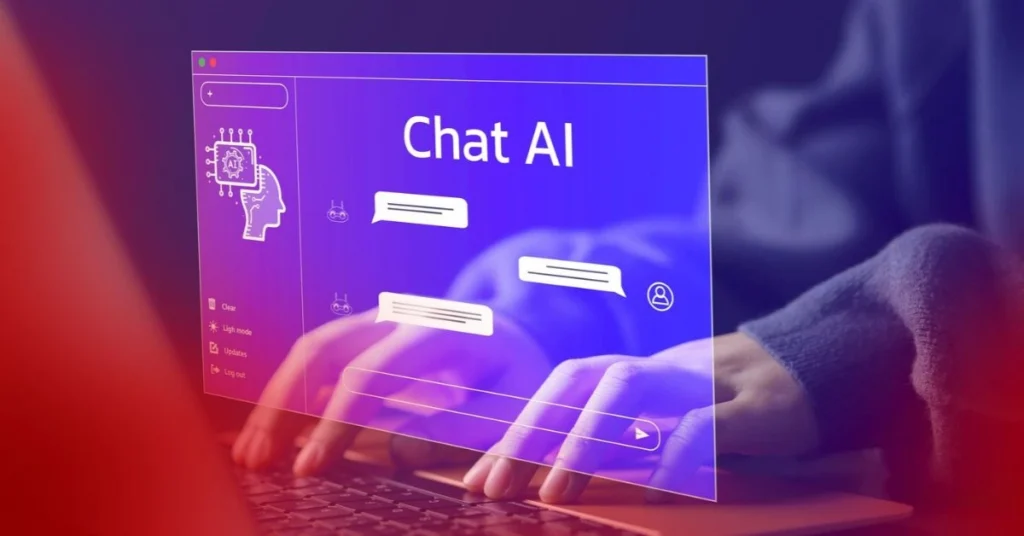
This thinking shapes how we’re building our own AI product, Bizimply Concierge.
Our customers are diverse. We work with independent operators, regional groups and large multi-site brands, each with different needs and priorities. A one-size-fits-all chatbot wouldn’t serve them well. So we’ve focused on three principles.

Trustworthy & Secure
Workforce data is sensitive. Concierge is built so that customers can rely on its answers and know their data is protected.
Useful Every Day
Concierge surfaces proactive insight cards, such as attendance anomalies and trends, and lets managers dig deeper by asking follow-up questions. It's designed around real problems, not novelty.
Sustainable Cost
We’ve deliberately chosen a lightweight architecture, with a free allowance built in and credits only used when a manager asks a question, so the value Concierge delivers isn’t eroded by rising running costs. We've deliberately chosen a lightweight architecture so that the value Concierge delivers isn't eroded by escalating running costs.
We’re starting with targeted, practical capabilities and building from there, rather than chasing every new trend.
Lessons for Operators
The lesson for any operator is simple: embrace AI, but do it realistically. It’s a tool for informed decision-making (Concierge is adding proactive suggestions in the coming months), not a magic wand. A few practical steps will help.
Start with the problem
Identify where your managers lose the most time or where mistakes cost the most. Point AI at those areas first.
Invest in clean, reliable data
AI is only as good as what it learns from. Accurate rotas, timesheets and sales data are the foundation.
Pair AI insights with human context
Treat recommendations as a starting point. Your managers know things the data never will.
Understand the long-term cost
Ask your providers how pricing will change as you scale, and weigh that against the value you expect.
The opportunity ahead
The power and benefits of AI are immense, and we’re excited about what’s possible. Our goal at Bizimply is to harness that potential and deliver targeted workforce management and HR tools that bring real value every day to head offices, managers and employees.
AI won’t replace the people who make shift-based industries work. But used well, it can give them more time, better information and fewer surprises. Bizimply Concierge is adding more AI capabilities, phase by phase, in a carefully thought out manner. That’s not hype. That’s reality.