

Running a shift-based business means handling complex, fast-changing data, from roster changes and overtime to new starters and leavers. By connecting Bizimply directly with PayCaptain, businesses can eliminate manual data entry for good. Time and attendance data captured in Bizimply flows seamlessly into PayCaptain’s payroll engine, giving Bizimply customers automated accuracy, total compliance peace of mind, and time back to focus on operations rather than spreadsheets.
Why Best-of-Breed Beats All-in-One for Payroll
PayCaptain on Connecting Your Tech Stack
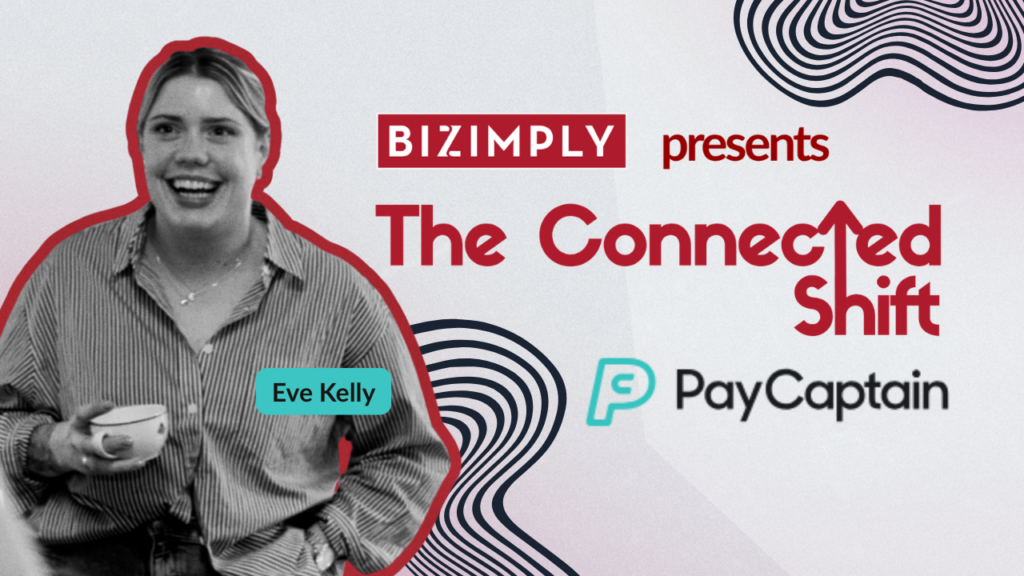
Shift-based businesses run on complicated, ever-changing data: shift patterns, new starters, leavers, bank details, overtime. When that data lives in disconnected spreadsheets and systems, someone ends up re-keying it by hand, and every manual step is a chance for something to go wrong. For this episode of The Connected Shift, Bella sat down with Eve Kelly from PayCaptain to talk about what that actually costs a business, and why a best-of-breed, connected tech stack beats an all-in-one platform for payroll specifically.
The Real Cost of Disconnected Systems
Eve has spent nearly ten years selling payroll into businesses with complex, high-volume shift patterns, and she’s seen the same pattern play out again and again. Disconnected systems mean spreadsheets, duplication, and manual re-keying, and that translates directly into compliance risk. When pay, shifts and hours aren’t flowing automatically into a system that can calculate them accurately, mistakes creep in. In the worst cases Eve has worked on, that risk becomes real: employees losing trust in their pay, and in shift-based, hourly-paid roles particularly, that loss of trust hits people where it matters most. As Eve put it, financial security is one of the most fundamental parts of Maslow’s hierarchy of needs, and disconnected systems put that at risk.
Most businesses only address this reactively, Eve says, usually after something’s already gone wrong: an employee has left, there’s been a compliance breach, or a national minimum wage issue has surfaced. The fix isn’t a single system trying to do everything. It’s separate, specialist systems (HR, rostering, payroll) with strong, direct integrations between them, so the nuance in each part of the business is properly understood rather than squeezed into a one-size-fits-all box.
Why Best-of-Breed Wins Over All-in-One
This is where Eve is unambiguous: “Having an all-in-one just doesn’t fit their needs. It’s essentially trying to fit their setup into a box.” Complex, shift-based businesses have nuanced data in HR, workforce management and payroll that all needs specialist handling, and things like national minimum wage compliance are a shared responsibility across that whole stack. A best-of-breed approach, where each system does what it’s best at and connects seamlessly to the others, means nothing gets forgotten or left behind in translation.
A Connected Tech Stack in Practice
Eve’s shared plenty of examples of this transformation. One recurring pattern: businesses that had overtime data sitting in a separate HR system, manually pulled and recalculated before it ever reached payroll. Every one of those manual touches was a point of risk. Once that overtime data flowed automatically from the HR system into payroll, that calculation risk disappeared. The same goes for simple changes, new starters, leavers, bank detail updates, shift pattern changes, all of which drive compliant calculations for things like statutory sick pay and accurate salary changes. Pulled automatically rather than manually, the outcome is consistently the same: less risk, better audit readiness, faster admin, and a better experience for the people actually being paid.
That employee experience point matters more than it might first appear. Payroll is often a thankless task, invisible until something goes wrong, and when it does go wrong the impact lands squarely on the employee: wrong pay, a missing bonus, holiday that hasn’t been added. For a workforce that’s often living paycheck to paycheck, those mistakes aren’t just inconvenient, they affect real financial security. PayCaptain’s own integration with HMRC, for example, pulls tax code changes directly into the system and surfaces them to employees in real time through their app, rather than leaving them to find out the hard way.
Practical Tips for Ops Teams
For anyone still manually moving data between systems, Eve’s advice is simple: map your data flow. Look at what’s coming into payroll today, whether that’s spreadsheets or ageing systems, work out what’s actually integrated versus what isn’t, and identify where your biggest risk sits. That exercise alone tends to build a strong business case for change.
When evaluating tools that need to work well together, Eve flags two things to watch for. First, be honest about what “integration” really means. Sometimes it’s a genuine real-time API connection; sometimes it’s just a flat file, a manual download and upload dressed up as integration. It’s worth bringing in a technical person to dig into the detail rather than taking a sales pitch at face value. Second, look for flexibility, not just the existence of an integration. An open API that can flex around a business’s specific setup is what makes a best-of-breed stack actually work day to day, and it’s flexibility that, in Eve’s words, “will never come with an all-in-one.”
How PayCaptain Connects with Bizimply
PayCaptain’s approach is built entirely around this best-of-breed model, working with direct, real-time API integrations into workforce and HR systems like Bizimply. Data such as new starter details, leaver changes and shift patterns flows straight from Bizimply into PayCaptain, so payroll calculations happen automatically and compliantly, without anyone re-keying a thing.
This is exactly what breaking down silos for good looks like in practice, imagine what your ops and payroll teams could focus on when work connects, instead of firefighting the data between two systems that don’t talk to each other.
Watch the full conversation with Eve Kelly on The Connected Shift, and find out more about PayCaptain on their website or LinkedIn.