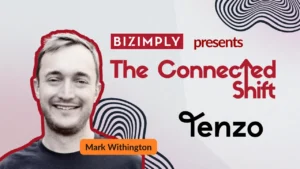


Most of the conversation around connected tech stacks in hospitality tends to focus on large, multi-site groups. In this episode of The Connected Shift, Bella spoke to John Mason from Sideways about a part of the market that’s often overlooked: small and mid-sized operators, and why connected, best-in-class tools matter just as much for them, even if the problem shows up differently.
Why disconnected systems hit SMEs differently
John’s view is that the real cost of disconnected systems really depends on the size of the business. Sideways is built for small to medium-sized operators, and unlike larger groups juggling a sprawling trail of disconnected tools, SMEs often can’t afford that many systems in the first place. What they want instead is a handful of tools that actually talk to each other, like Sideways connecting directly to a workforce management platform such as Bizimply. The opportunity cost of not having that connection is straightforward: without it, people can’t get access to what they need quickly.
What the integration actually does
For Sideways and Bizimply, that means people data flows from Bizimply automatically so staff can complete their training in Sideways, then completion data is pushed straight back, giving head office and platform admins a single, real-time view across both systems. Customers running the two together tell John it’s seamless: with data syncing both ways in real time, no manual exports, no double entry, no lag.
SMEs are catching up on integration
Bella made an interesting observation here: SME-focused hospitality tech has historically lagged behind enterprise software when it comes to systems actually talking to each other, even though there’s no shortage of tools built for smaller operators on features and pricing. That’s shifting. Managers and owners are getting more tech-savvy, and conversations about APIs and integrations are becoming a normal part of buying decisions, not a niche, technical afterthought.
Why best-in-class wins trust
John puts a lot of this down to how founder-led businesses like Sideways and Bizimply operate. SMEs gravitate towards companies where you can pick up the phone and talk to a real person, try the product before committing, and build trust by seeing it work rather than being sold to. Because the Sideways-Bizimply integration is already built, handing it to a prospective customer to test costs nothing extra, and it makes the decision far easier when they can see two platforms genuinely working together before they buy. Combine that with sensible pricing on both sides, and the value add, in time saved and labour hours recovered, makes the decision straightforward.
As Bella pointed out, this is where best-in-class really separates itself from all-in-one. Platforms trying to do everything struggle to offer the same personalised, hands-on partnership, there’s simply too much surface area to go deep with any one customer. A specialised solution can commit to that depth instead.
The practical tip: let people try before they buy
Asked for one piece of advice for anyone still manually moving data between systems, John didn’t reach for a rehearsed answer. Instead, he pointed back to what he’d already said: let people
actually use the product, not just watch a demo. When two platforms are genuinely talking to each other, data going in and coming out, there’s nowhere for gaps to hide. That transparency is what builds the kind of trust where a customer will pick up the phone and ask “could it do this?”, rather than quietly looking elsewhere.
This is what breaking down silos for good looks like for smaller operators too, imagine what your team could focus on when the tools you already use for training and workforce management simply talk to each other.
Watch the full conversation with John Mason on The Connected Shift, and find out more about Sideways at sideways.ai.